Lancaster County Backyard
Hi! Questions about a pavilion, pergola, gazebo or shed? Leave us a message and we’ll get back to you shortly.
"*" indicates required fields

A wooden gazebo can completely transform the atmosphere of your backyard. It offers a defined space for gathering while keeping the open-air feel you love. You get shelter from the elements, plenty of natural light, and the timeless character that only genuine wood can provide.

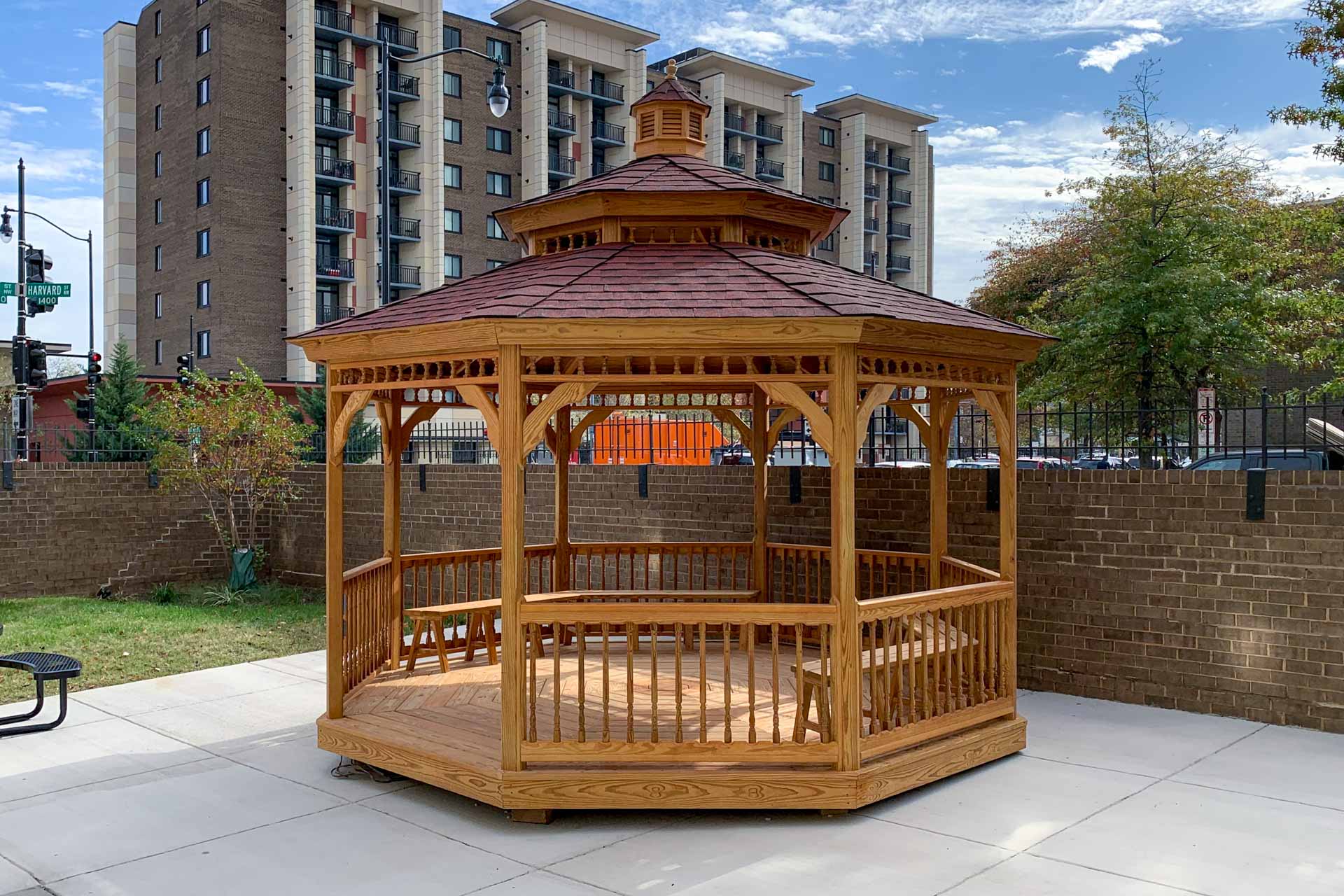
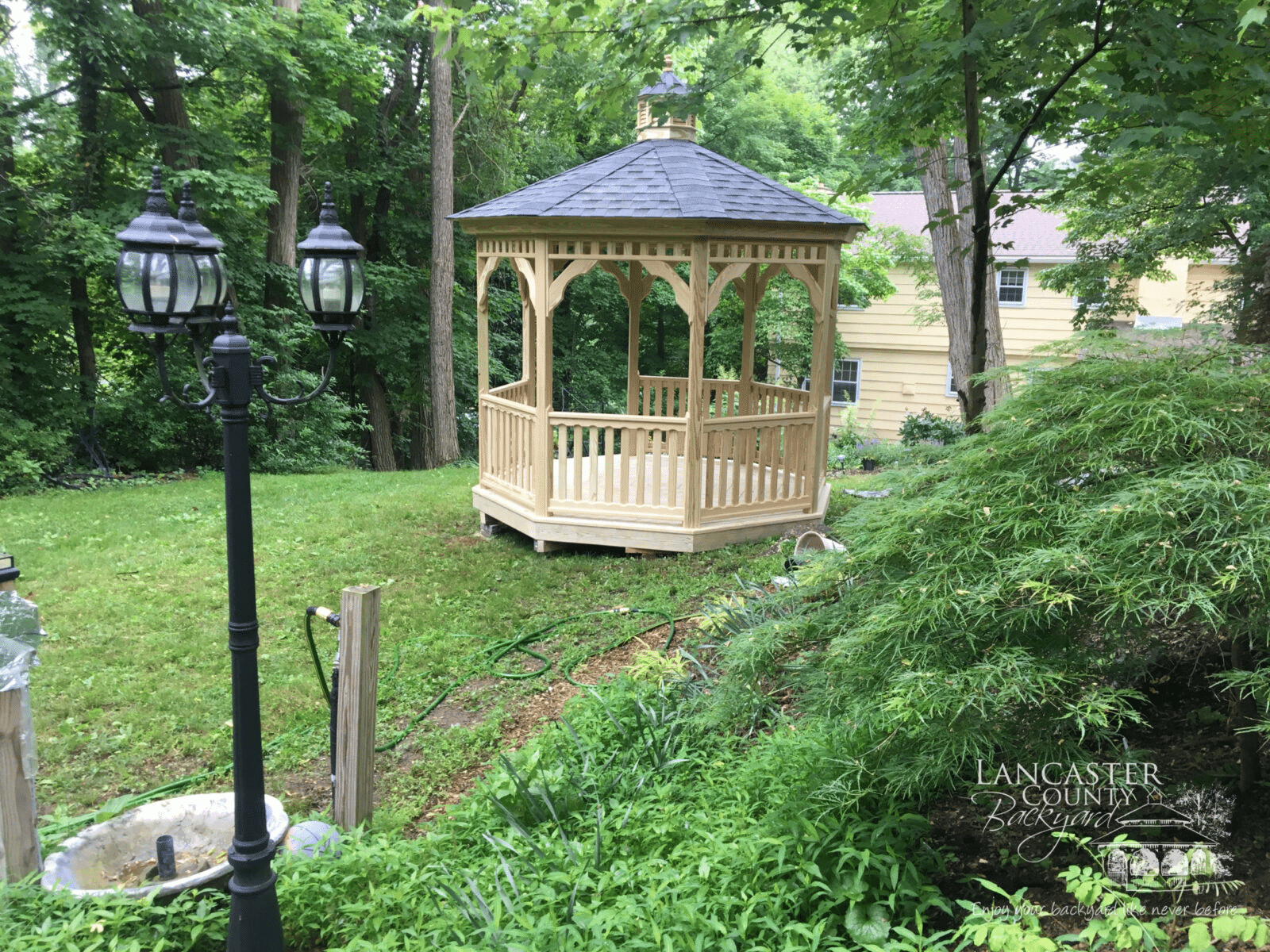
Although the octagon wooden gazebo is the most basic of our outdoor gazebo line, it’s not limited to the simple and basic. It comes with a wide variety of sizes, roof options, railing styles, bench designs, and more.

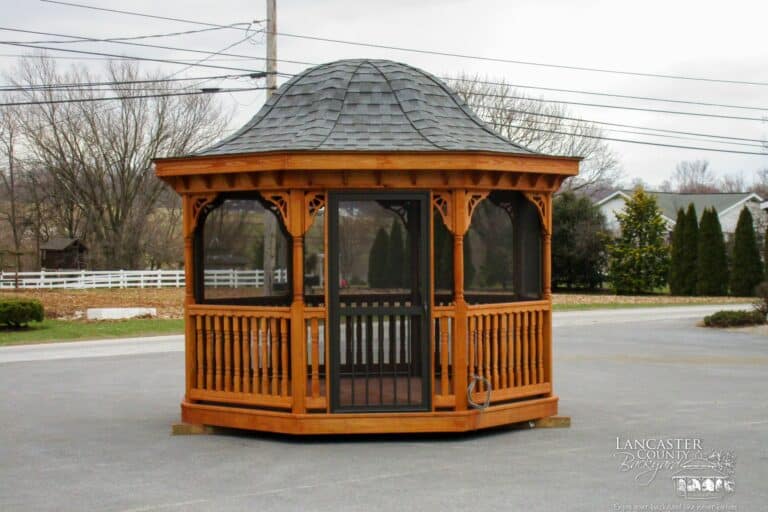
If you want to enhance your existing landscape or decorate your lawn with a centerpiece, this aesthetically pleasing oval wooden gazebo will make a stunning addition wherever it is placed.

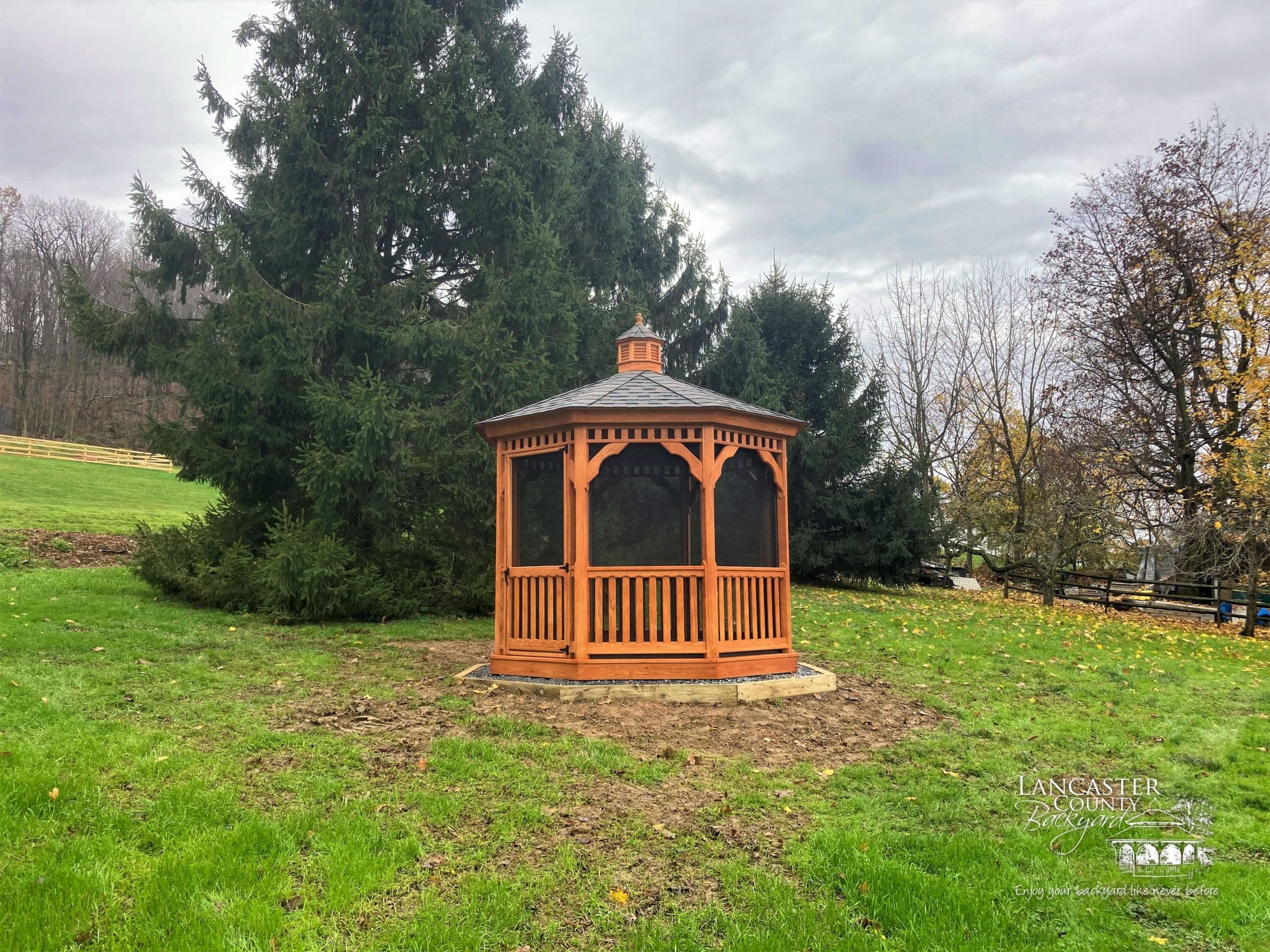
Featuring a simple, four-sided design, the rectangle wooden gazebo allows you to maximize interior space without sacrificing the refined look of the exterior. This gazebo makes a great addition to your backyard space where you can truly relax.
| Starts at: | Available Sizes: | Roof Pitch: | Rails: | Rafters: | |
|---|---|---|---|---|---|
 Wood Octagon
| $4,994 |
|
|
|
|
 Wood Oval
| $5,448 |
|
|
|
|
 Wood Rectangle
| $5,410 |
|
|
|
|
Lead times can vary depending on the project. The best way to get an accurate answer is to fill out a quote form, where your project’s current lead time will be displayed as you complete it.
Gazebo prices can vary significantly based on the size and materials you choose. If you’re looking for detailed pricing or want to explore your options, we’re happy to provide a free personalized quote.
Vinyl, standard wood, and heavy timber are the most commonly chosen materials for gazebos. Each type offers advantages in terms of upkeep, longevity, and overall cost, giving homeowners flexibility based on their style preferences and budget.
The answer depends on your specific needs and preferences. A gazebo offers a bit more protection from the weather and sun, while a pergola is seen as more decorative, while also offering some protection. For more info on this topic, check out our blog on gazebos vs. pergolas.
The milling of lumber creates an extremely smooth surface. For wood pavilions, you can choose a factory-stained finish, or wait to apply the first coat about three months after installation, so most checking is visible and the drier surface accepts stain more evenly; for care tips, see this blog post about “Preserving Outdoor Wood”. For timber frames, we recommend selecting the factory-stained timber option for optimal results and strong UV protection, and reapplying stain on a consistent schedule as exposure and weather demand.
Wood checking is a natural part of owning a wood structure; on pavilions, pergolas, and gazebos, it usually appears in the first year and is mostly cosmetic. Some choose to wait about three months after installation before staining so the wood can settle. On timber frames, checks are typically larger and change with the seasons, yet in a properly engineered structure, they do not indicate a loss of strength.
Depending on your requirements, we could produce a kit for your structure. We don’t recommend DIY kits for gazebos, however, as the building requirements can be complicated. Our builders are fast, efficient, and experts in their field. Give us a try!
Some areas require building permits for gazebos and others do not, so check with your local municipality if you have questions for your area. We have diagrams for gazebos that may be useful in the permitting process if you do find you need a permit (see gazebo specifications).
The skids beneath the gazebo serve two purposes. They make transport to your site safe and efficient, and depending on your foundation, they can add structural stability. They also create an air space under the floor so the structure can breathe and stay dry. If you prefer a skidless installation, let us know at the time of purchase so we can plan removal during setup.
We do not normally level a gazebo using blocks, though in some situations for smaller gazebos we can use blocks for leveling. Let us know in advance if you believe blocking may work for your situation. Three things apply in the event we agree to try to level your gazebo with blocks: (1) You will need to provide ample blocks and have them on site before the gazebo arrives, (2) you may need to pay extra for the time needed to block the gazebo, and (3) we will not return to reblock a gazebo that has settled after installation.
Grass areas are seldom level enough to set a gazebo without any preparation. The gazebo may be set on a concrete pad, patio, deck, or bed of crushed stone. A good way to prepare a foundation is to cut out 4″ to 6″ of sod and fill it with ¾” crushed stone. You will likely want to frame the pad with timbers if the ground is not level, since you will then need to dig deeper at some places and may need to hold the stone in place on one of the sides. The foundation needs to be level for your gazebo to be level.
Gazebos can sometimes be lifted into place with a crane if access to the location is too narrow.
The gazebo is normally assembled at the shop and brought to your location on a truck and trailer. The truck and trailer are then backed into your yard to the point where you want the gazebo, the trailer is tilted, and the gazebo is slid off the back of the trailer.
We do offer premier-quality stain in a variety of shades and colors. Although this service provides the most convenient staining option for your structure, it’s even better to wait for staining until three or four months after construction. Dryer wood receives stain better, though you don’t want to wait so long that oxidation becomes evident and the wood starts to gray. Ask us for more direction on the ideal staining procedure for your project.
Please don’t hesitate to reach out. We welcome your questions and are happy to discuss your project in more detail. Call us at 267 638 6983 or email us at sales@lancastercountybackyard.net.

We just had our new 10×12 Gazebo installed yesterday. It’s even prettier than we imagined and the installers were fantastic. So happy–thank you LCB!
Great service! Excellent craftsmanship! Highly recommend!
professionally built gazebo with good price, very well equipped delivery and smooth installation
I own a construction company and can appreciate a professional crew that grinds throughout the day to complete their project. I received exactly what I asked for and the cleanup that followed was exceptional.
We just had a 14×16 pavilion built and we love it! It’s exactly what we wanted. It is well constructed and completed on time. All of the workers were very professional and on time. We would highly recommend.
They do great work. I looked at several companies and I am very pleased with the quality of the structure and the service they’ve provided.
Am very happy with Lancaster County Backyards. Our 14 foot gazebo was delivered on time and is a beautiful addition to our yard.
It was an absolute pleasure dealing with your company and you personally. We are so happy with the finished product.The workmanship is superior to other shed companies. We have and will recommend you to our friends and family. Thank you
A great group of people to deal with. Our gazebo was built with quality materials and exceeded our expectations. My wife and I enjoy both breakfast and dinner there as often as we can. We love the openness and shade it offers.
Wonderful experience with the planning and building of our pavilion. They were so helpful and the workmanship was top notch. It’s become the new favorite part of our home. We love sitting outside in the rain!
Excellent experience with the construction of a custom pergola. Very professional. Work was done efficiently and first rate quality. Highly recommend.
The re-roof these folks performed on our cedar shake gazebo was beautiful. The attention to detail was particularly impressive. Everything was removed and replaced in one day. Fantastic!


